


Skip to content

Solutions / M&A due diligence

Put historical claims in context.

Review narrative history, trace source relationships, and preserve the evidence behind reputational questions.

Request a briefing
Dark glass institutional building seen from below.

Illustrative analysis

Narrative evidence annex — historical context and source relationships.

Earlier record

Initial claim appears in a niche publication.

“Questions raised about governance practices at the target.”

Follow-up

Independent outlet references the claim.

“Cites earlier report on governance questions at the target.”

Further coverage

Broader media picks up the story.

“Renewed debate after earlier allegations resurface.”

Reframed narrative

Claim appears with updated framing.

“Concerns about leadership culture and oversight.”

Recent discussion

Topic resurfaces in current discussions.

“Fresh questions raised as deal progresses.”
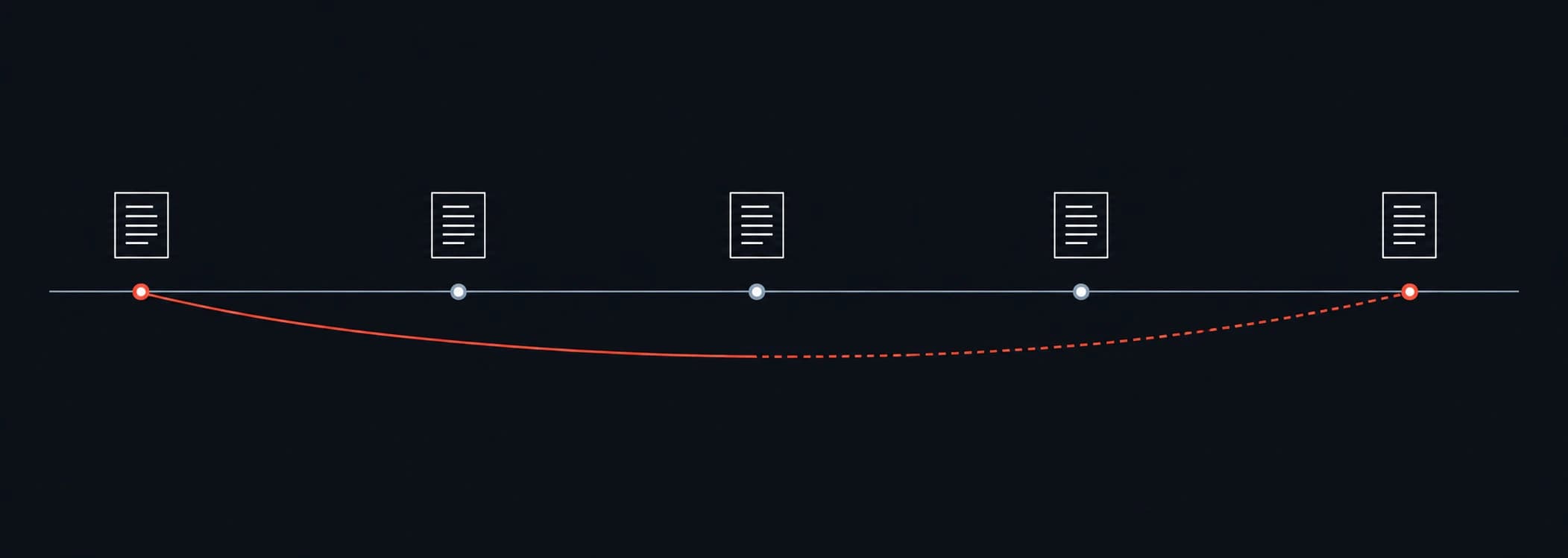
Five source records follow a historical claim from its initial appearance to later reporting and reappearance.
Observed movementAssessed pathway (lower confidence)

A clearer record for review.

Historical context

See how claims evolve over time, including earlier, less visible sources that may still shape current narratives.

Source dependence

Identify when multiple articles rely on the same original source, helping you avoid counting repeated references as independent corroboration.

Unresolved questions

Highlight where evidence is limited, contested or incomplete, so your team can focus further due diligence where it matters.

From scattered claims to a traceable dossier.

  1. 01

    Reconstruct narrative history

    Use Watchfloor and Campaign Lab to find earlier mentions, related coverage and how the story has changed over time.

  2. 02

    Connect repeated references

    Map source relationships to identify shared origins and duplicated claims across outlets.

  3. 03

    Preserve findings and limitations

    Save source material in Vault and prepare a clear record in Briefing Studio, including what is known and what remains unverified.

Initial claimFollow-upFurther coverageReframed narrativeRecent discussion
Five source records advance from an initial claim to recent discussion, keeping each source relationship distinct.
Original source in a niche outletTwo articles reference the same sourceWider media coverage with similar framingClaim reappears with new wordingTopic resurfaces in recent discussion

A due diligence evidence annex.

SOVRINTIllustrative brief

M&A DUE DILIGENCE

Narrative evidence annex

  1. I.

    Narrative history

    Summary of key claims and how they have evolved over time.

  2. II.

    Source record

    Relevant sources with notes on relationships and overlap.

  3. III.

    Areas requiring verification

    Topics where evidence is limited, contested or incomplete.

  4. IV.

    Confidence and limitations

    Assessment of what can be stated, and key uncertainties.

Support the review with source-linked context.

Generate a clear, source-referenced record of relevant claims, how they evolved and where further verification may be needed. The output supports internal review; it does not provide legal or deal recommendations.

Historical narrative summary

A concise overview of key claims, their evolution and source relationships.

Evidence annex

A detailed, source-linked record for further review.

Discuss your diligence scope.

Speak with our team about how SOVRINT can support your m&a due diligence workflow.